Reactive and Agile Drones: Challenges and Opportunities
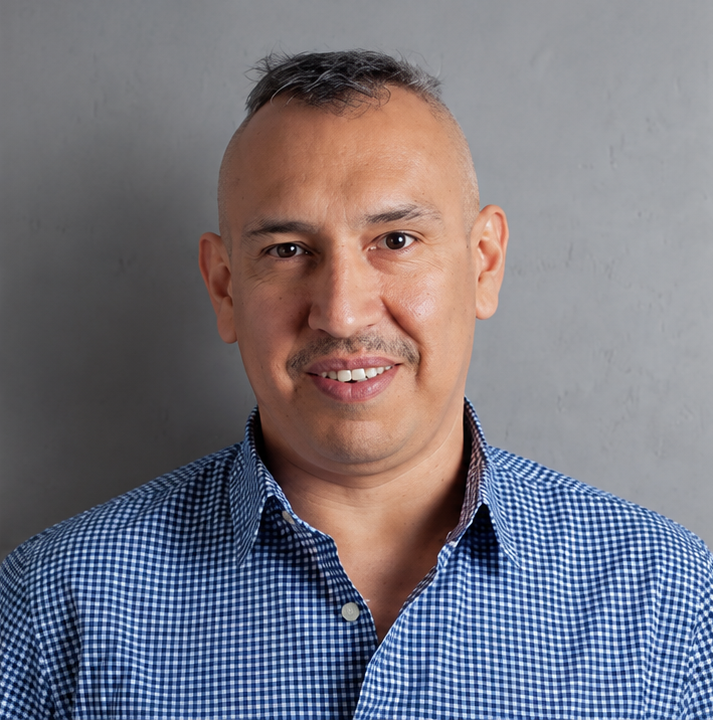
Dr. Pedro Castillo
CNRS / Université de Technologie de Compiègne (UTC), France
Abstract
Technological advances in drones have led to a substantial increase in the applications (civil, military, environmental, …) of these vehicles. These (new) applications have led to a substantial growth in control and navigation strategies, ranging from fundamental ones that analyze their stability to those that integrate or develop perception architectures within the control loop. Today, there is a vast number of scientific articles related to aerial drones. Many of them focus on conservative movements without pushing the vehicle to its maneuverability limits. New control strategies are emerging from this need to improve the agility and reactivity of these types of vehicles. These new strategies, which are designed to improve system performance, challenge certain control paradigms by introducing new (hybrid) methodologies based on models and/or data. In this talk, some control solutions developed to improve the agility and reactivity of drones will be presented. The solutions, based on Lyapunov analysis, were validated through real-time experiments. Preliminary results based on hybrid methods (AI + model-based control) have been obtained and will also be presented in this talk. These results have been evaluated in the presence of significant endogenous and exogenous disturbances.
Biography of the speaker
Pedro Castillo received his B.S. degree in Electromechanical Engineering from the Instituto Tecnológico de Zacatepec, Mexico, in 1997, his M.Sc. degree in Electrical Engineering from CINVESTAV, Mexico, in 2000, and his Ph.D. in Automatic Control from the Université de Technologie de Compiègne (UTC), France, in 2004. He received the Best Ph.D. Thesis Award in Automatic Control from Club EEA, France, in 2005. He has held visiting positions at the University of Sydney, MIT, the Polytechnic University of Valencia, and Virginia Tech. He is currently a Research Director at CNRS, working at the Heudiasyc Laboratory, UTC, France. His research interests include nonlinear and adaptive control, time-delay systems, observers, autonomous vehicles, robust control, navigation, real-time control, and robotics.